
Playlist for Food and Environmental Justice!
As part of the Lab’s “Understanding Global Food and Environmental Justice through Music Initiative,” which explores music as a way to understand structural and historical inequities in the food system, and as a source of strength and power among those fighting against oppression, we have curated our first Lab playlist.
Please see – and listen – below!
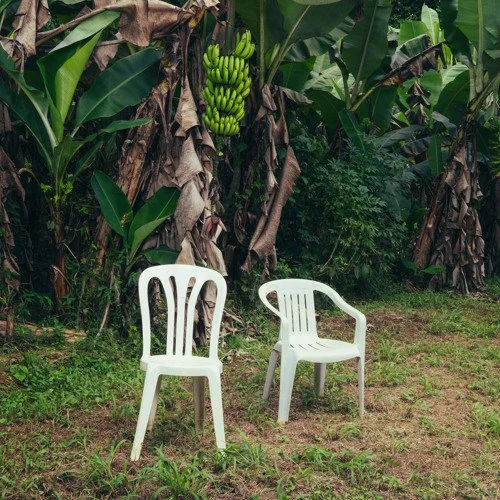
Bad Bunny, LO QUE LE PASÓ A HAWAii
3m49s
On the album DeBÍ TiRAR MáS FOToS
2024 Rimas Entertainment LLC.
LO QUE LE PASÓ A HAWAii is part of Bad Bunny’s 2025 album DeBÍ TiRAR MáS FOToS, featured in the most recent Super Bowl Halftime Show. The song describes the forced displacement of peasants from the Puerto Rican countryside, the privatization and enclosure of Puerto Rico’s rivers and beaches, gentrification and the role of government corruption in allowing this to happen. Bad Bunny sings: “Quieren al barrio mío y que abuelita se vaya / No, no suelte′ la bandera ni olvide' el lelolai / Que no quiero que hagan contigo lo que le pasó a Hawái” (They want my neighborhood and they want Grandma to leave / No, don't let go of the flag or forget the lelolai (a “scat” characteristic of jibaro or peasant songs) / I don't want them to do to you what happened to Hawaii). The song is an homage to Puerto Rican culture, sovereignty, ecosystems and foodways, and a protest against their loss.
-Majandra Rodriguez Acha
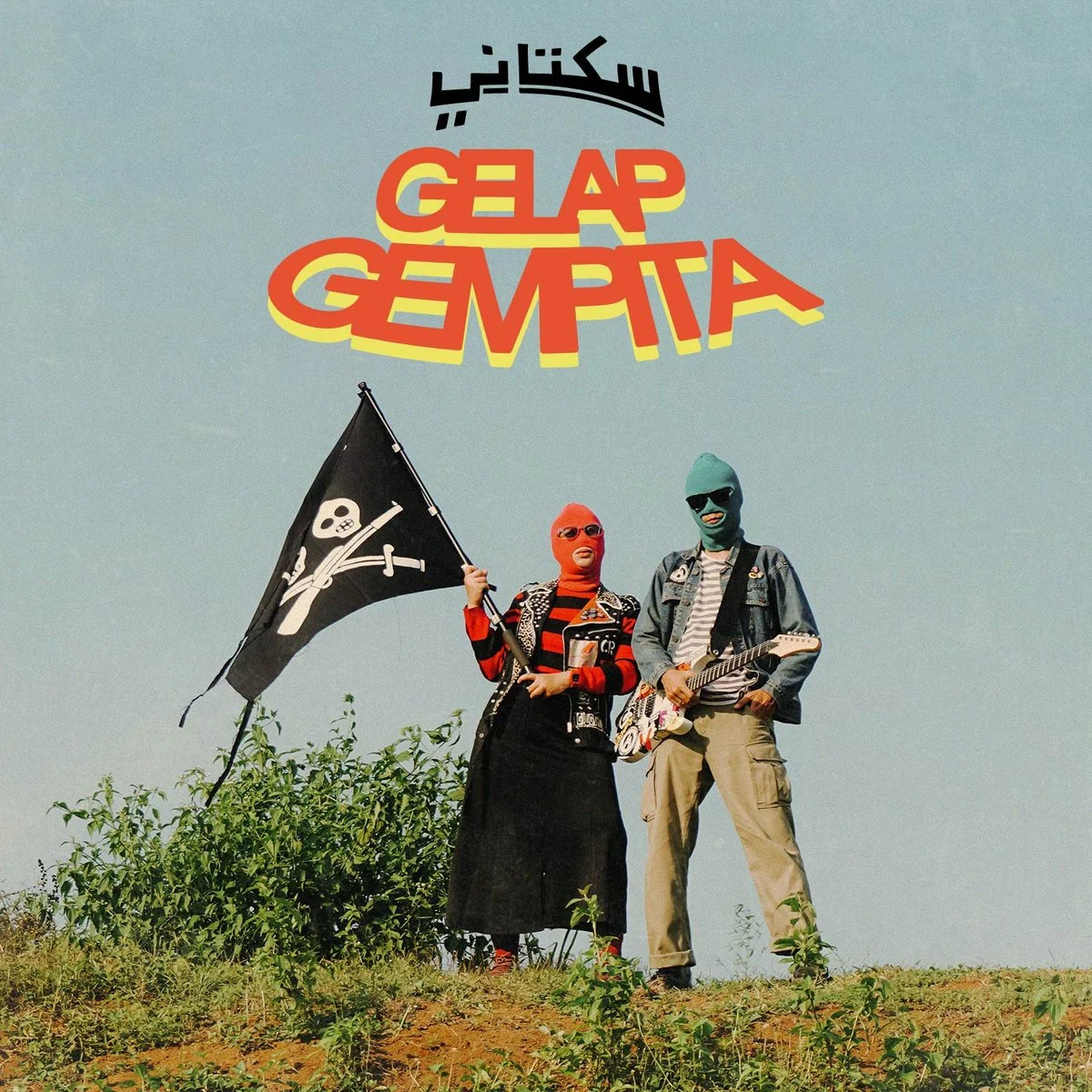
Sukatani, Sukatani
3m41s
On the album Gelap Gempita
2023 [Dugtrax Records]
This song is by Indonesian punk band Sukatani, of which the song is eponymously named. It opens with an audio clip of a farmer who had his crops uprooted by the local government, only for him to replant them until harvest the following season. He then feeds his crop back to the very people that uprooted them the first time as a sly act of resistance hidden within the generous act of feeding a guest. This song combines a younger punk sound with a local dialect of Javanese (rather than standard Bahasa Indonesia). It is simultaneously a critique of social services for being used as tools of state oppression and a celebration of farmers as protectors of the land, providers of their communities, and agents of resistance.
-Afi Alexander
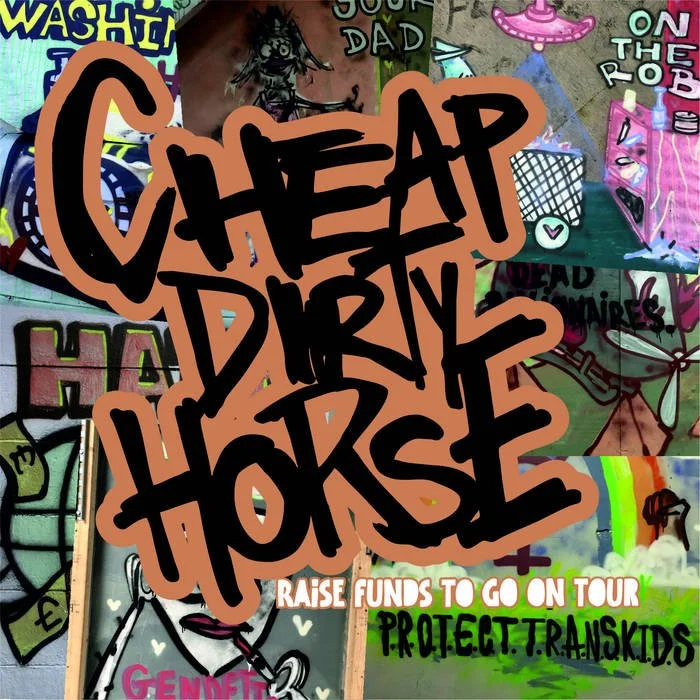
Cheap Dirty Horse, On the Rob
3m57s
2023 [Self-release]
In “On the Rob”, Nottingham, UK, queer folk-punk band Dirty Cheap Horse highlights the absurdity and injustice of the contemporary capitalist food retail system, where a handful of supermarket brands control all of the food supply chains, grab land, drive small retailers out of business, and pay their employees unfair wages. In light of all these abuses, the band asks, where’s the harm in putting a bit of bread and hummus in one’s bag?
-Cédric Gottfried
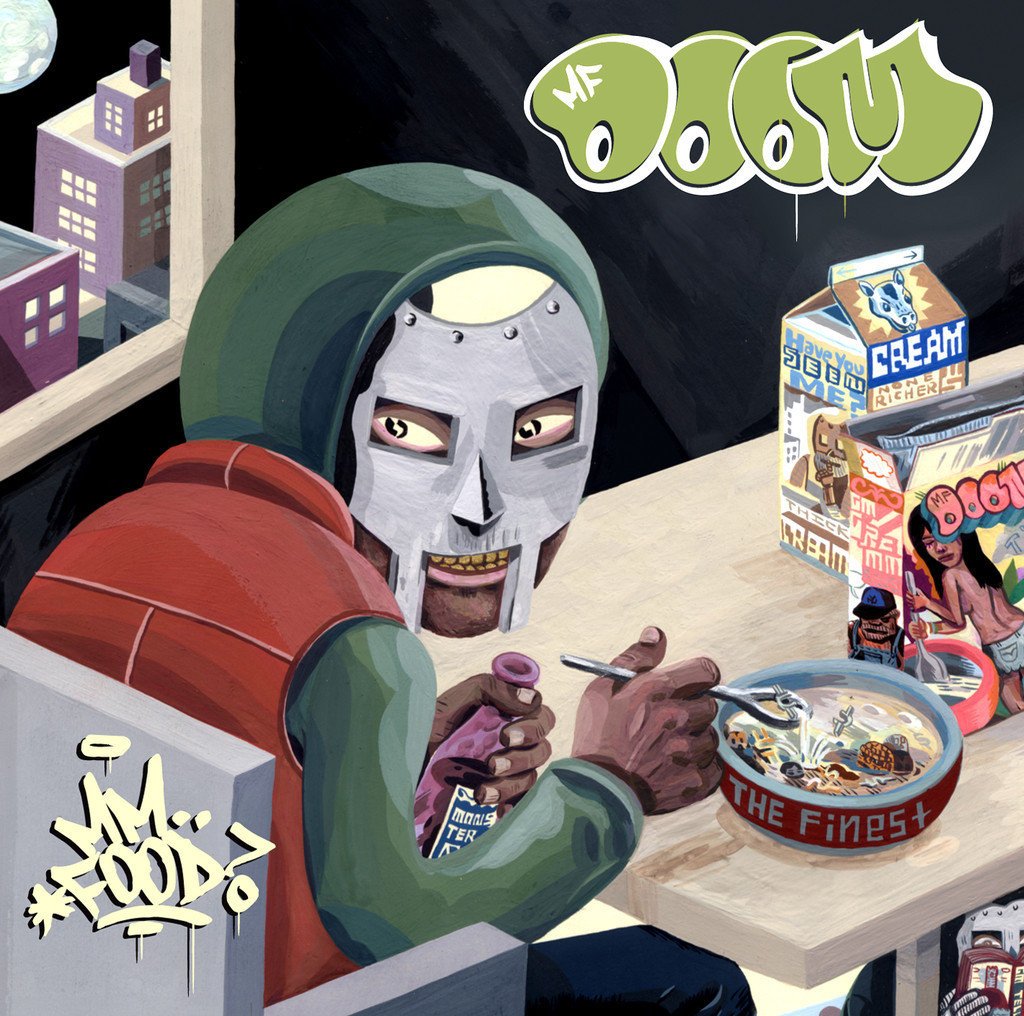
MF DOOM, Kon Karne
2m52s
On the album MM..FOOD
2004 Rhymesayers Entertainment
Kon Karne is one of the songs from the MF DOOM (DOOM) album MM..Food, which features songs that are all plays on words. In this song, DOOM talks about the death of his brother and how that affected his life. The whole album is worth checking out, as DOOM utilizes multiple types of sampling, including cartoons, other songs, and speech in innovative ways for an album of any genre. This concept album talks about friendship, loss, anger, violence, rap beefs, and societal issues that mostly affect Black people.
-Mike Harrington

Björk, Sorrowful Soil
3m15s
Fossora. 2022
One Little Independent Records
Video here
There’s plenty to say about Björk’s expansive artistry; in every album, there’s a thematic core that covers a wide range of subjects such as the human condition, nature at large, and celestial systems. In her latest solo studio album, Fossora, she unearths ecosystem functions through symbols like mushrooms—most precisely and sonically with songs like "Mycelia," but several songs also touch upon the avenues of femininity and motherhood embedded in earthly systems. "Sorrowful Soil" is one of my favorites to come out of her career to date. Throughout the chorus, she sings the lyrics, "Into sorrowful soil / Our roots are dug." It also describes aspects of life and fertility: "In a woman’s lifetime / She gets four hundred eggs / But only two or three nests." I think this song expresses the intrinsicality and interconnectedness of life and grief beautifully, which also crosses the boundaries of food systems.
-Rocco Morabito

Prince, Avalanche
On the album One Night Alone
2002, NPG Records
On April 21, 2026, people and communities around the world commemorated the 10 year anniversary of the passing of Prince. A musical genius (and celebrated vegan), Prince’s artistry was far-ranging and diverse. Having grown up in the Twin Cities (of which Prince’s Minneapolis is part), I was nonetheless unaware of the breadth of his music until I began a deep-dive after his death.
Notwithstanding his infamous “Vault” and other unreleased songs and demos, Prince’s music delves far deeper into social justice issues than the (epic) “Purple Rain,” “Raspberry Beret,” (not really about food…) or dozens of other “hits” that he wrote for himself and others. (“Starfish and Coffee” is another food-or-environment -adjacent work.)
Prince’s song “Avalanche” has been an inspiration for me in the Understanding Food and Environmental through Justice Initiative. The song speaks to historical intricacies of the abolition of slavery in the US and the exploitation of Black jazz musicians by white gatekeepers (in the early 20th century in this case). These lessons can apply to understanding the realities and dangers of historical revisionism and appropriation in food and agriculture – including inventions by Black innovators that are often attributed to middle class white-led movements or people. One such example is George Washington Carver, botanist, scientist, and inventor, some of whose innovations have been incorrectly misattributed in dominant food movement narratives. (See Penniman 2018; White 2018 for detail.) This is again an inspiration for our work.
-Kristin Reynolds
References cited:
Penniman, Leah. Farming while Black: Soul Fire Farm's Practical Guide to Liberation on the Land. Chelsea Green Publishing, 2018.
White, Monica M. Freedom Farmers: Agricultural Resistance and the Black Freedom Movement. UNC Press Books, 2018.